
Most people visit Mount Rainier in July and August — and for good reason. But each season on the mountain offers something the others can't. Here's what to expect, when to go, and how to make the most of whichever window you choose.
Summer (July – September)
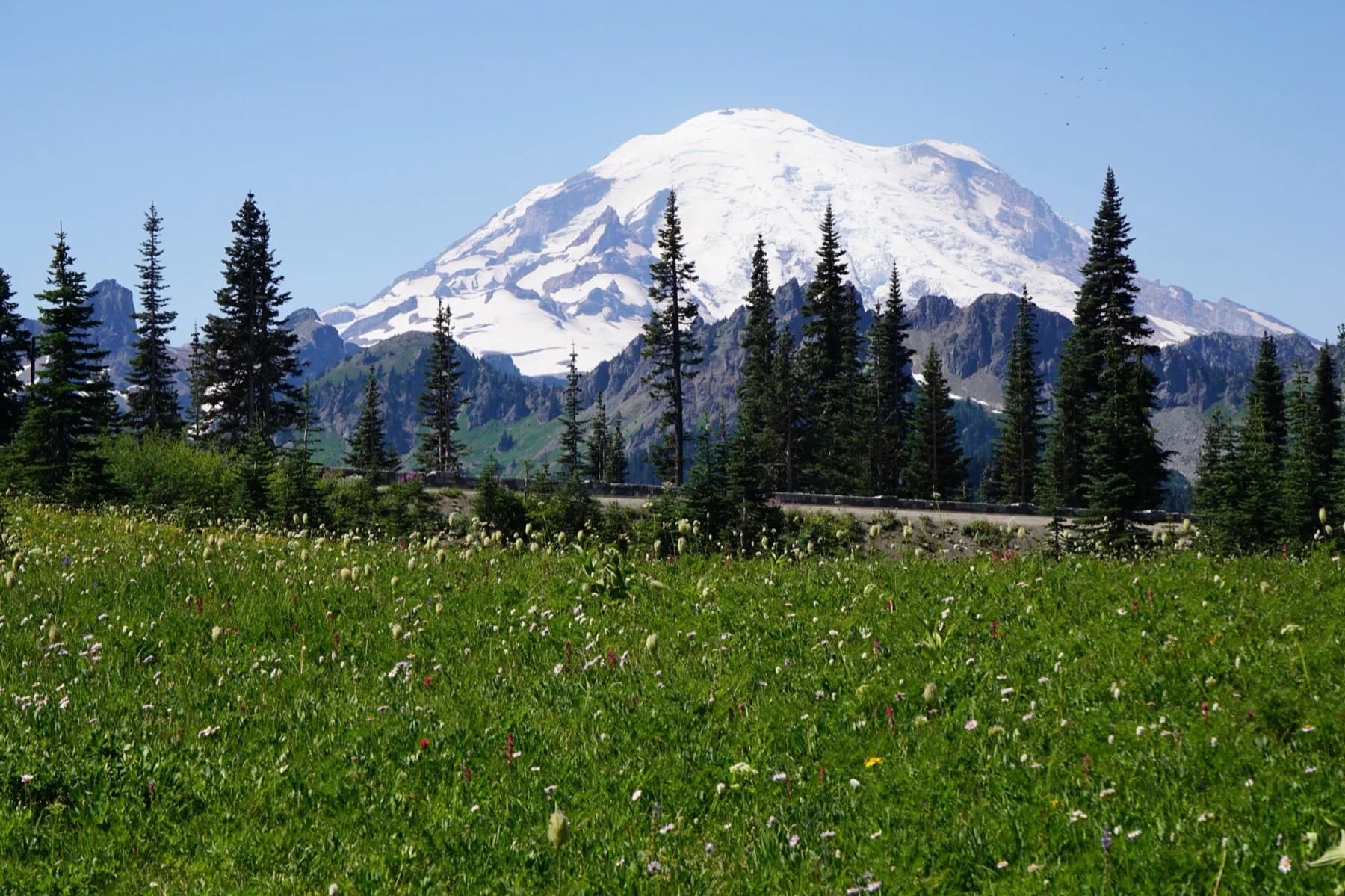
This is peak season and the only time all park roads are guaranteed open. Paradise typically becomes snow-free by mid-July, and the wildflower meadows hit their stride from late July through mid-August. The Skyline Trail, Nisqually Vista, and Comet Falls are all fully accessible. Temperatures in Ashford sit in the mid-60s to low 70s — warm enough for shorts on the trail, cool enough to sleep with the windows open.
The tradeoff is crowds. Paradise parking lots fill before 10 AM on summer weekends. If you can visit midweek or arrive early, you'll have a dramatically different experience. Longmire and the lower Nisqually corridor trails are far less congested any day of the week.
Fall (October – November)
The secret shoulder season. Crowds thin dramatically after Labor Day, and the lower-elevation trails stay accessible through October. The vine maples and huckleberry bushes along the Nisqually River turn brilliant red and orange. Fog settles into the valleys in the mornings and lifts by midday — the kind of atmosphere that makes the forest feel ancient.
Paradise road typically closes for the season in late October or early November depending on snowfall. Longmire stays open year-round. Temperatures drop to the 40s and 50s, and rain becomes more frequent — but if you're coming for the hot tub, the fireplace, and the quiet, this is the move.
Winter (December – March)
Mount Rainier transforms. The Nisqually corridor becomes a snow corridor — the trees drip with white, the river runs steel-grey, and the mountain (when it appears through the clouds) is staggering. Snowshoeing at Paradise is one of the best winter experiences in the Pacific Northwest. Rangers offer guided snowshoe walks on weekends, and the area above the visitor center becomes a natural wonderland.
The road to Paradise closes above Longmire when conditions require it, but the lower section stays plowed. Chain requirements are common from November through April. The cabin in Ashford is at a low enough elevation (1,700 ft) that snow is intermittent — you might wake up to a dusting or to rain, depending on the day.
Winter is the quietest time at the cabin. No crowds, no rush. Just the fireplace, the hot tub, and the sound of the forest.
Spring (April – June)
Spring is the most unpredictable season — and the most rewarding if you time it right. Lower trails start opening in April, and the waterfalls are at their most powerful as snowmelt feeds every creek and cascade in the park. Christine Falls and Narada Falls are thundering in May. By late June, the meadows at Paradise start to emerge from the snow — sometimes with wildflowers pushing through the last patches.
Weather swings wildly: 55°F and sunny one day, 38°F and raining the next. Layer everything. But if you don't mind a little unpredictability, spring offers something no other season does — the mountain waking up.
The bottom line
There's no wrong time to visit Mount Rainier. Summer is the most accessible and the most crowded. Fall and spring offer solitude and atmosphere. Winter is for people who want the mountain to themselves.
From Redtail Rendezvous, you're five miles from the Nisqually entrance year-round — close enough to catch sunrise at Longmire and back at the cabin for breakfast. Whatever season you choose, the hot tub will be warm and the fireplace will be ready.
Ready to plan your trip?
Check live availability and book directly for the best rate — no platform fees, no middlemen.